


Generally, no. Once a Texas real estate contract is signed by both the buyer and the seller, the seller is legally bound to sell on the agreed terms. Sellers typically don't get an option period to cancel for any reason, and changing your mind usually isn't a contractual reason to walk away. A seller can end the contract only in limited situations the contract allows, or if the buyer agrees in writing to cancel.
It's a question we hear more often than you might think. A seller accepts an offer, feels great about it, and then life shifts. The next home falls through, a job changes, a higher offer shows up, or the price starts to feel too low. Suddenly the question isn't "how do I sell?" but "can I get out of this?"
If you're selling in Montgomery, Conroe, Magnolia, The Woodlands, Spring, Willis, or anywhere across Southeast Texas, here's what to know before and after you accept an offer.
Why Buyers Can Cancel and Sellers Usually Can't
When people think about backing out of a contract, they're usually thinking about the buyer's side, because buyers have a built-in way to do it. In Texas, buyers typically have an option period. They pay an option fee and gain the right to terminate for virtually any reason within a set number of days.
Sellers don't get a matching right. You receive the option fee, but you don't receive a window to change your mind. From the moment the contract is fully signed, you've committed to sell your home at the agreed price, on the agreed timeline.
That's why it's so important to be sure you're ready to sell before you accept an offer, not after.
Why Sellers Want Out (And What the Contract Says About Each)
Most sellers who want to back out aren't being careless or dishonest. Something changed. Here are the reasons we see most often:
- "I can't find a home to buy." This is a big one. You accepted an offer, but the next home fell through or the search is taking longer than expected. Unfortunately, not having a place to go isn't typically a reason the contract lets you cancel, unless you built that protection into the deal ahead of time.
- "A higher offer came in." It happens, especially in a competitive market. But a better offer after you've signed isn't a contractual reason to terminate. We'll cover the option you do have in a moment.
- "I think I priced it too low." Markets move, and it's easy to second-guess a price once an offer is in hand. Even if values rise after you sign, the agreed price is the agreed price. Getting a home valuation before listing can help you make a more informed pricing decision from the start.
- "My circumstances changed." A job change, a family situation, a financial shift. These are real, stressful events, and we don't want to minimize them. But a life change on its own doesn't release a seller from the contract. What it does mean is that you should talk to your agent as early as possible, because early conversations leave more room for solutions.
- "I've just got cold feet." Selling a home is emotional, especially if it's one you've lived in for years. Seller's remorse is common. It isn't a basis for ending the contract, though.
Can a Seller Cancel Just Because They Changed Their Mind?
Not without consequences.
Cold feet, regret over the price, or a change of plans generally isn't a valid reason to end a contract. If a seller refuses to move forward without a basis in the contract, they may be considered in default, and that's where things can get expensive. We'll explain what that means in a moment.
When Can a Seller Legally Get Out of a Contract?
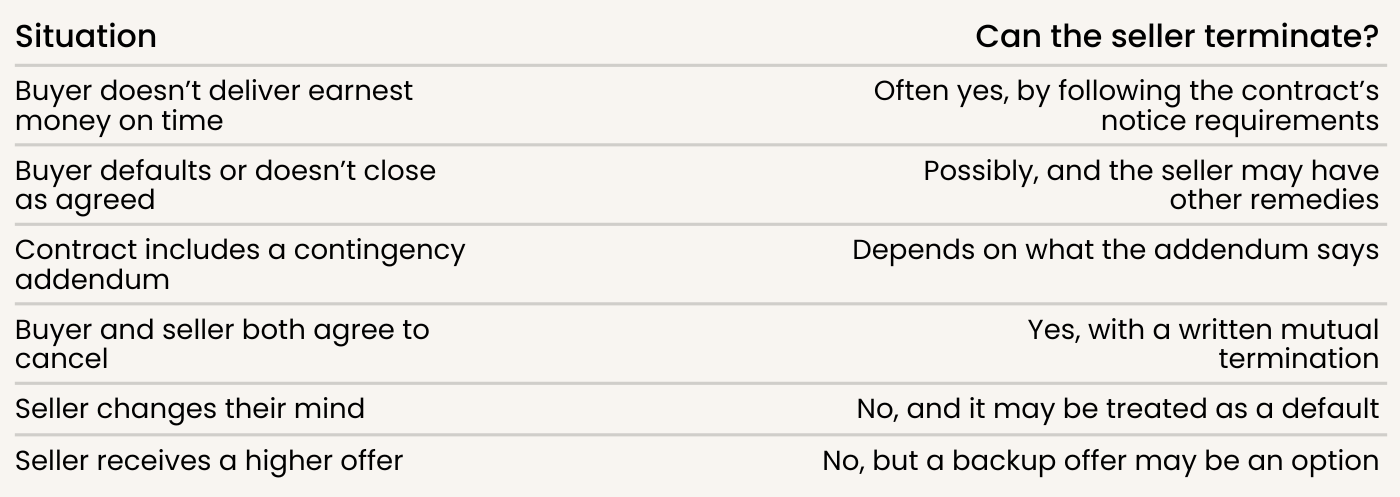
There are a few situations where a seller may be able to end the contract. What applies to you depends on your specific contract and any addenda attached to it.
Let's walk through the ones that matter most.
The buyer misses the earnest money deadline. Texas contracts give the buyer a set number of days after signing to deliver earnest money to the title company. If the buyer misses that deadline, the seller may have the right to terminate, typically by following the contract's written notice requirements. It's worth knowing, but sellers shouldn't count on it. Most buyers deliver on time.
The buyer defaults. If a buyer fails to meet a required deadline or doesn't close as agreed without a valid reason under the contract, the buyer may be in default. That can open the door to the seller's remedies, which may include terminating and claiming the earnest money.
The contract includes an addendum. Some contracts include provisions that spell out when a seller can terminate. A common example is a sale-of-other-property contingency, where the buyer's purchase depends on selling their own home first. Read these closely, because they vary from deal to deal.
Both parties agree. This one gets its own section, because it's the most realistic path for a seller who truly needs out.

What is a Mutual Termination?
A mutual termination is exactly what it sounds like: the buyer and seller both agree, in writing, to cancel the contract. It's usually the cleanest way out if circumstances have changed.
A few things to understand about it:
- The buyer doesn't have to agree. You can ask, but you can't require it.
- The buyer may want something in return. That could mean covering costs they've already spent, like an inspection or appraisal, or other terms you negotiate.
- The earnest money has to be dealt with. The title company holding it will typically need written agreement from both sides of where it goes.
- It should always be in writing. A verbal "sure, that's fine" doesn't protect anyone.
Buyers often have their own plan tied to the house, including a lease ending, a job relocation, and children starting school. So a seller asking out should expect a real conversation, not an automatic yes. Approaching it honestly and early tends to go better than waiting until the last minute.
What if a Higher Offer Comes In?
This is one of the biggest temptations for sellers, especially when the market is moving. But a better offer generally isn't a reason to cancel a contract you've already signed.
What you can do is accept a backup offer. A backup contract sits behind your first one and only takes effect if the first contract ends properly. It lets you keep your options open without breaking the deal you've already made.
The key phrase there is "ends properly." A backup offer doesn't give you a way out of the first contract. It just means that if the first deal falls through for a legitimate reason, such as the buyer terminating during the option period, you already have another buyer lined up. If you're getting multiple offers, ask your agent about this before you accept the first one.
What Happens If a Seller Backs Out Anyway?
When a seller doesn't comply with a Texas contract, the seller may be in default, and the buyer typically has choices. Depending on the contract and circumstances, a buyer may be able to:
- Ask a court to enforce the contract (called specific performance), which can result in an order requiring the seller to complete the sale
- Pursue damages
- Terminate the contract and have their earnest money returned
In plain English, specific performance means a judge could order you to sell the house to that buyer, on the original terms. That surprises a lot of sellers, who assume the worst outcome is simply losing the deal.
Even when it doesn't go that far, a seller who backs out can face legal fees, delays, and costs far beyond whatever prompted them to back out in the first place. Sellers may also have compensation questions under their listing agreement if a sale falls apart, which is one more reason to talk with your agent before making a decision.
Many of these situations get resolved before they reach a courtroom, but that's not something to count on.
What to Do If You're a Seller Who Wants Out
If your circumstances have changed, the worst thing you can do is go quiet or miss deadlines. Here are a few steps to take before making any decisions:
- Tell your agent right away. They can review the contract for any legitimate flexibility.
- Talk to a Texas real estate attorney before deciding to terminate. The consequences of getting it wrong can be significant.
- Ask the buyer about a mutual termination. They don't have to agree, but some will consider reasonable terms.
- Look at alternatives to canceling, which we cover next.

Alternatives to Backing Out
Often, what a seller really needs isn't to cancel the sale. It's more time, or a softer landing. If that's your situation, it may be worth asking the buyer about:
- A later closing date. If you haven't found your next home yet, a few extra weeks may solve the whole problem.
- A temporary lease after closing. This lets you stay in the home for a short period after the sale closes while you finish your move.
- Adjusting the terms in writing. Some buyers are flexible on timing, especially if you're upfront and ask early.
None of these are guaranteed, since the buyer has to agree. These alternatives may help both parties avoid a default, and buyers may be more willing to consider adjustments when the seller communicates early and honestly.
What If You're the Buyer and the Seller Is Backing Out?
If you're on the buyer's side, keep records of all communication and deadlines, and make sure you've met your own obligations under the contract. Then talk to your agent about your options under the contract's default provisions, and consider speaking with a qualified Texas real estate attorney before deciding whether to terminate, seek enforcement, or pursue damages.
How Sellers Can Avoid Ending Up Here
Most of the time, sellers who want to back out didn't have a bad plan. They had an incomplete one. The best way to avoid that is to prepare before you accept an offer:
- Decide your ideal timeline, and how much flexibility you'd need if your next home isn't ready
- Price your home based on current local conditions, including what's happening in Montgomery County real estate market
- Read every offer carefully, including the closing date and any contingencies
- Make sure everyone with an interest in the property is on board
- Ask your agent about a backup offer if you receive more than one
- Have a plan for where you'll live if the sale closes sooner than you expect
Careful preparation prevents most of the situations that make sellers want to cancel.
What This Means for Sellers in Montgomery County and Southeast Texas
Whether you're selling in The Woodlands, Montgomery, Conroe, Magnolia, Spring, or Willis, accepting an offer is a serious commitment. Market conditions may shift after you sign, but the contract is what controls your rights and responsibilities, not how the market moves afterward.
At Southern Heritage Realty, we want sellers to feel informed before they sign, not surprised afterward. Our experienced real estate team helps buyers and sellers navigate important decisions throughout the transaction. We'll walk you through the contract, the timeline, and your options if plans change, so you can make decisions with confidence.
Thinking about selling your home? Explore our seller resources or contact Southern Heritage Realty at 713.252.3188 to discuss your next steps.
This article is for general information and is not legal advice. Every transaction depends on its specific contract. For legal questions, consult a qualified Texas real estate attorney.
Frequently Asked Questions
Can a seller back out of a house sale in Texas?
Generally, no. After a contract is signed, a seller can typically end it only under rights the contract provides, such as when a buyer defaults, or by mutual agreement.
Can a seller cancel after accepting an offer?
Not simply because they changed their mind. Sellers don't typically have an option period, so canceling without a contractual reason may be treated as a default.
What happens if a seller backs out of a contract in Texas?
The buyer may be able to ask a court to enforce the sale, pursue damages, or terminate and receive their earnest money back.
Can a seller accept another offer after accepting one?
Not to replace the first contract. A seller may be able to accept a backup offer that takes effect only if the first contract is properly terminated.
Can a seller back out during the option period?
No. The option period is the buyer's right. The seller doesn't get a corresponding right to cancel.
Can a buyer sue a seller for backing out?
Potentially, yes. Remedies depend on the contract and the situation, so consult a qualified Texas real estate attorney.
Can both sides agree to cancel?
Yes. A written mutual termination can end the contract if both parties agree.
Check out this article next