

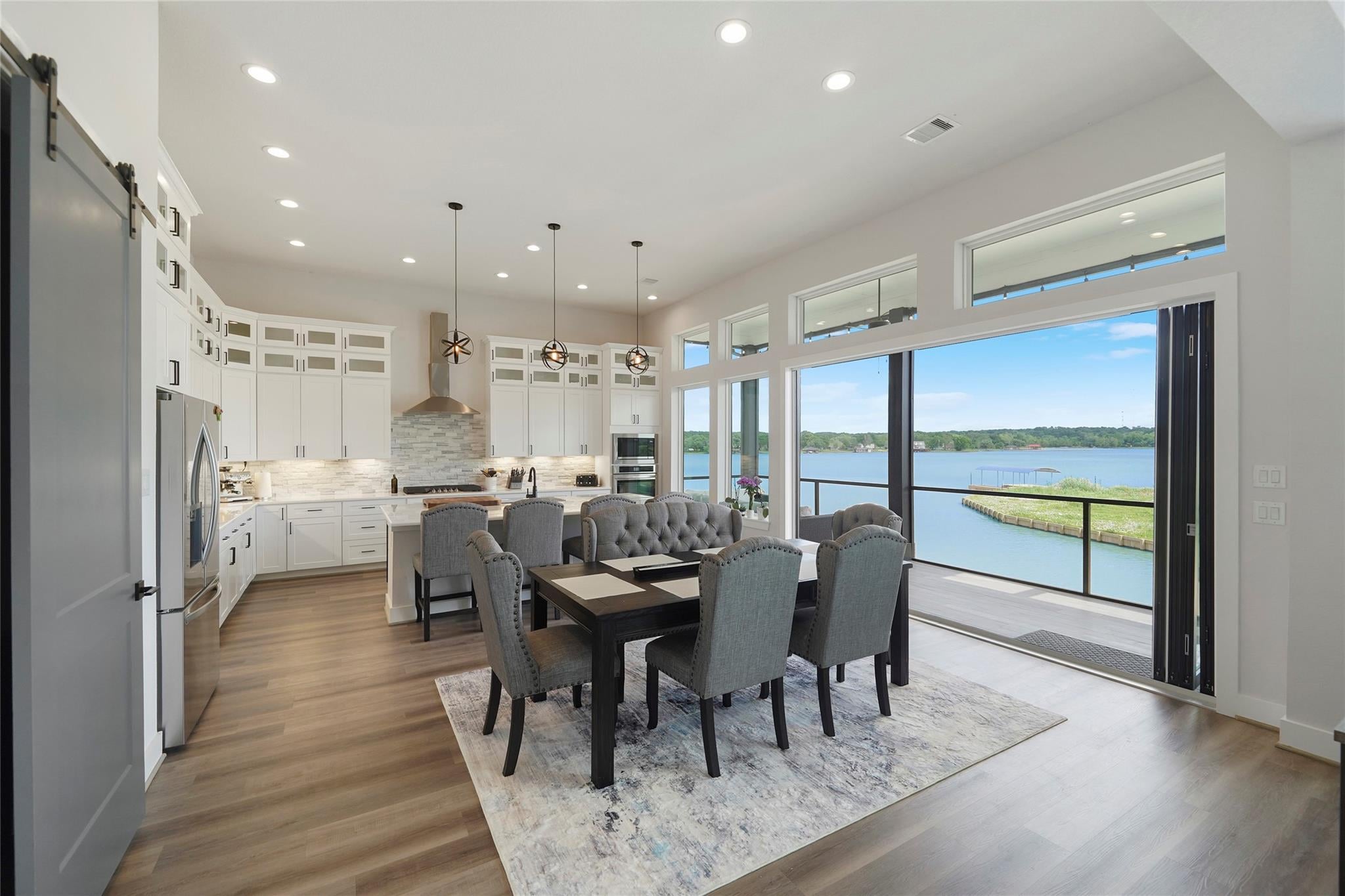
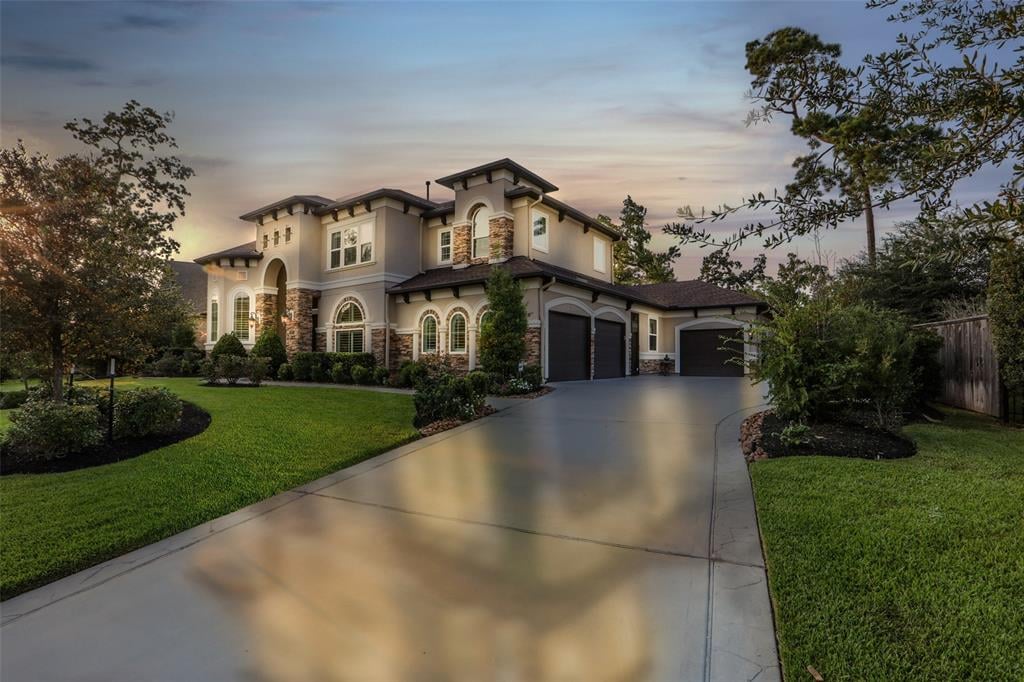
When you tour a home in Texas, focus on the big, expensive things first: the foundation, the roof, the HVAC system, water damage, drainage around the property, and how the home handles Texas weather. Then look at layout, light, storage, and neighborhood fit. You don't need to be an inspector to notice most of these. You only need to know where to look and what to ask.
That's the short version. Here's the longer one, written for buyers walking through real houses in Montgomery County and Southeast Texas.
Before You Walk In: Set Yourself Up for a Good Tour
A showing usually lasts 20 to 40 minutes, and it's easy to spend all of it admiring the kitchen, bathrooms, and pretty staging. A little prep helps you see more.
- Look up the home first. Check the listing for the year built, lot size, HOA, and whether it's in a MUD (municipal utility district) or other special tax district.
- Tour in daylight when you can. Natural light shows stains, cracks, and wear that lamps hide. If you love the house, come back at a different time of day, if possible.
- Bring your phone and take lots of photos and video. After five showings, the houses blur together. Photograph the electrical panel, the water heater label, the HVAC unit's data plate, and anything that made you pause.
- Bring a short list. A list keeps you focused when the staging is beautiful.
Your agent can also pull the Seller's Disclosure Notice before you tour, which is a good way to go in informed.
Start Outside: What the Exterior Tells You
Texas homes take a beating from sun, storms, and shifting soil, so the outside often tells you more than the inside.
The roof
Stand back at the street and look at the roofline. You're looking at a few things:
- Shingles that look curled, cracked, or missing granules
- Dark streaking or moss
- A sagging or wavy roofline
- Patches or mismatched sections
- Metal flashing around chimneys and vents that looks rusted or pulling away
Hail and wind are a regular part of life in our area, so a roof's story matters. Ask how old it is and whether it has ever been repaired or replaced after a storm. As a general rule, asphalt shingle roofs in Texas typically last somewhere around 15 to 25 years, depending on quality of the shingles, the ventilation, and the weather they've been through.
The roof also matters to your wallet beyond repairs. Some insurance companies look closely at roof age and condition, so it's smart to ask your insurance agent about coverage early in the process.
The foundation and drainage
Most Texas homes sit on a slab foundation, and our clay-heavy soil expands when it's wet and shrinks when it's dry. That means a little movement is common and not automatically a red flag. Still, take a walk around the outside and look for:
- Cracks in the brick or siding, especially stair-step cracks near corners or windows
- Gaps between the brick and window or door frames
- Soil pulling away from the slab
- Gutters that dump water right next to the foundation
- Low spots in the yard where water could pool
Good drainage is one of the best things a house can have. Notice which way the ground slopes. You want the yard to carry water away from the home, not toward it.
The yard, trees, and fencing
Look at big trees close to the house. Roots can affect foundations and plumbing lines, and branches hanging over the roof can cause damage in a storm. Check the fence for leaning, rot, or gaps, especially if you have pets or kids. Wood fences are common here and need upkeep.
Also look at the wood trim, the fascia boards, and the eaves. Soft, discolored, or peeling wood often means moisture has been getting in, and in our humid climate, wood rot and termites are things buyers should keep in mind.
Inside: Signs You Can Spot Without an Inspector
You'll hire a licensed inspector later. For now, you're looking for clues that tell you whether this house deserves one.
Doors or windows
Open and close every door and window. Doors that stick, don't latch, or leave uneven gaps at the top corners can point to settling. They can also be a simple humidity issue, so treat this as a reason to ask questions, not a reason to panic. Look at the window seals too. Fogging between double panes means the seal has failed.
Ceilings, walls, and floors
Scan the ceilings and upper corners of walls for stains, bubbling paint, or fresh patches. A freshly painted spot in an otherwise older room is worth a polite question. Look at the floors for gaps, uneven areas, or a "bounce." Put your hand flat on the wall and notice if it feels damp. Check inside closets and cabinets under the sinks, where water issues like to hide.
Smells
Your nose is a useful tool. A musty smell can point to moisture or poor ventilation. Strong air fresheners and plug-ins can mean the seller is trying to cover something, though sometimes they simply have a dog or cat.
Test the Big Systems: Age, Condition, and Cost
The systems in a home are where a lot of surprise costs live. When you tour, find out how old each one is. In a Texas summer, these systems earn their keep.
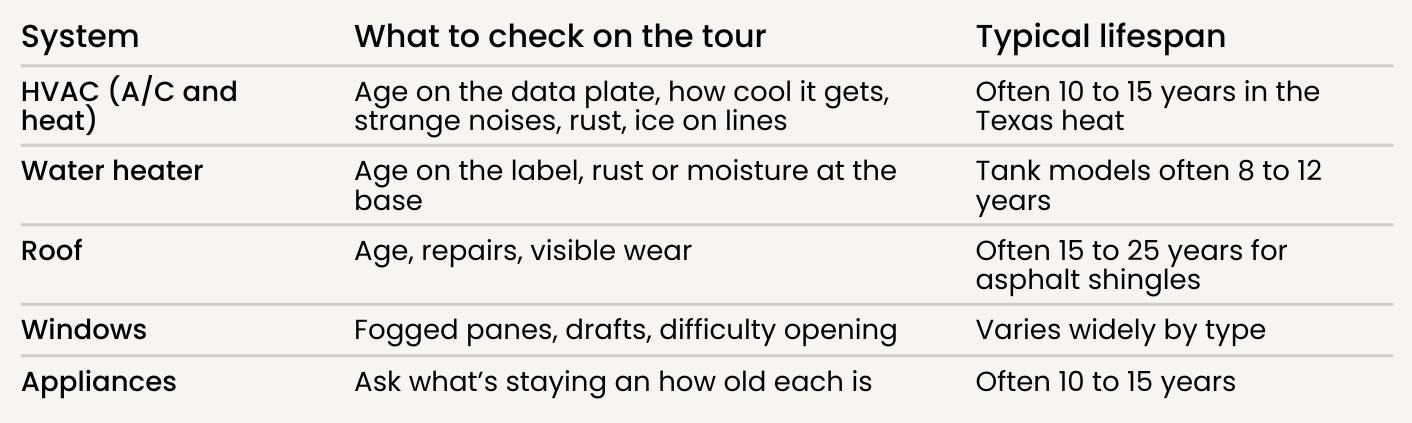
Those ranges are typical, not guarantees. A well-maintained 15-year-old system can outlast a neglected 8-year-old one, so ask about maintenance as well as age.
A quick note on HVAC
You don't need to be an A/C technician to get a feel for it. Check that every room has airflow and that the house feels comfortable throughout. Look at the outdoor unit for rust, bent fins, or standing water. Ask when it was last serviced. If the home has an older unit, ask your agent to help you plan for the possibility of replacing it down the road, because it's one of the larger costs a homeowner can face.
Questions to Ask the Seller or Listing Agent
Great buyers ask great questions. These are worth bringing along:
About the home's systems
- How old is the roof, and has it ever been repaired or replaced?
- How old are the HVAC unit(s), and when were they last serviced?
- Has the home ever had foundation work? Is there transferable documentation?
- Have there been any plumbing or electrical repairs or upgrades?
About water and weather
- Has the home ever had water intrusion, roof leaks, or flooding?
- Has it been through a hurricane or major storm, and was there any damage?
- Is it in a flood zone, and is flood insurance required or recommended?
Texas sellers have to provide a disclosure related to flooding, and your agent can help you review it. It's also worth looking at FEMA flood maps for the address, and knowing that a home outside a mapped flood zone can still experience heavy rain flooding. That's especially relevant in parts of Southeast Texas, where bayous, creeks, and heavy rainfall are part of the landscape.
About costs of ownership
- What do the electric and water bills typically run?
- Is there an HOA, and what are the dues and rules?
- Is the property in a MUD or other special district, and what is the tax rate?
- What are the annual property taxes?
In Montgomery County, many neighborhoods include a MUD, which can add to your overall tax bill. It isn't a bad thing. Those districts often fund water, sewer, and drainage. You just want to see the full monthly picture before you fall in love.
About the sale
- How long has it been on the market?
- Why are the sellers moving?
- What's included in the sale?
The last few questions help you understand how much room you may have to negotiate. Your agent can ask many of them for you.
Special Things to Consider in Montgomery County and Southeast Texas
Some details matter more in our part of Texas than they would elsewhere.
Septic systems and wells. If you're touring a rural property or acreage north of The Woodlands, you may see septic and well systems. Ask where the septic tank is, when it was last serviced, and whether the well has been tested.
Trees and privacy. The piney woods are part of what makes this area special. They also mean more shade, more leaves, and sometimes more debris, so notice what's around the roof and the gutters.
Storm readiness. After the last several years of strong storms and outages in our region, a lot of buyers now ask about generators, hookups, impact-rated windows, and how well the roof is secured. You don't need all of those, but it's fair to think about what matters to your household.
Commute and growth. Montgomery County keeps growing, so think about the neighborhood as it may be in five years, not just today. Drive the route to work at rush hour. Check what's being built nearby. Visit on a weekday evening and a Saturday morning.
Don't Forget: Is It a Good Fit for Your Life?
A house can pass every test and still not be your house. While you tour, ask yourself:
- Does the layout fit how we live every day?
- Is there enough storage?
- Where would the furniture go?
- Is the yard usable for what we want to do with it?
- Do we feel good here?
Notice the traffic noise, the neighbors, and how close you are to schools, groceries, and the things you actually do. A beautiful home in the wrong spot can wear on you.

What About Red Flags That Need an Inspector?
If you spot something that worries you, you're not stuck. In Texas, buyers may negotiate an option period as part of their purchase contract. When included, it generally gives the buyer time to complete inspections and evaluate the property before deciding whether to proceed. A professional inspection is worth it even on a home that looks perfect.
Things that deserve a closer look include:
- Larger or growing foundation cracks
- Signs of ongoing water damage or mold
- A roof near the end of its life
- An older HVAC system that struggles to cool
- Outdated or unsafe electrical components
- Poor drainage that sends water toward the house
Seeing one of these doesn't automatically mean you should walk away. It means you have information, and information helps you decide whether to move forward, ask for repairs or a credit, or look elsewhere.
A Simple Touring Checklist You Can Save
- Roof age and condition
- Foundation cracks and drainage
- Doors and windows that open and close easily
- Ceiling and wall stains
- HVAC age and airflow
- Water heater age
- Water pressure and plumbing
- Electrical panel photo
- Smells (musty or heavily masked)
- Flood history and flood zone
- HOA, MUD, and tax details
- Neighborhood, noise, and commute
Tour Homes With a Team That Knows the Area
Walking through a home is easier when someone's beside you who knows what to look for, what to ask, and what's normal for this part of Texas. At Southern Heritage Realty, we help buyers across Montgomery County and Southeast Texas, from Huntsville to Galveston, tour homes with confidence and make decisions they feel good about. From your very first showing to the day you get your keys, we're the local resource for everything real estate.
Ready to start touring? Contact Southern Heritage Realty today and let's find the right home for you.
Frequently Asked Questions
How long should a home tour take?
Plan for 30 to 45 minutes for a home you're seriously considering. Take your time inside and outside, and don't feel rushed. If you're serious, ask for a second showing.
What are the biggest red flags when touring a house in Texas?
The big ones are foundation problems, water damage or mold, an aging roof, an HVAC system near the end of its life, and drainage that sends water toward the home. A professional inspection can tell you how serious they are.
Should I ask about the roof age and HVAC age?
Yes. They're two of the most expensive systems in a home, and their age affects your future costs and sometimes your insurance. Ask for the year installed and any service records.
Do I need an inspection if the home looks great?
Yes. Inspectors look at things you can't see during a tour, like the attic, the crawlspace, and the inside of the electrical panel.
Is a foundation crack a dealbreaker in Texas?
Not always. Small hairline cracks are common because of our soil. Wide, growing, or uneven cracks deserve a closer look from a professional.
How do I know if a home is in a flood zone?
Your agent can check FEMA flood maps for the address, and the seller's flood disclosure can tell you more about the home's history. Even if it's outside a mapped flood zone, it's smart to ask about flood history.
Check out this article next