
Yes, Conroe is growing fast, and it's not a fluke. A recent Quartz roundup of the fastest-growing U.S. cities put Conroe on the list alongside a handful of other Sun Belt boomtowns. For anyone buying or selling in Montgomery County, that growth shapes everything from how many homes are available to how long the drive to Houston takes.
We work in Conroe and across Montgomery County every day, so we wanted to go beyond the headline and share what's behind the growth, what it's like to live here, and what it means if you're thinking about buying or selling.
According to the U.S. Census Bureau, Conroe's estimated population reached 119,564 in July 2025, up from approximately 89,900 in April 2020. That's an increase of about 33% in just over five years. Those numbers help explain why Conroe continues to attract national attention as one of the county's growing cities, and why buyers and sellers throughout Montgomery County are paying attention.
A Quick Look at How Conroe Got Here
It helps to know where Conroe started, because the city's past explains a lot about how it looks and feels today.
Conroe began as a timber town, and in the 1930s the discovery of a major oil field turned it into an energy town almost overnight. Energy still plays a role, but the local economy has broadened a great deal. Retail, construction, logistics, and health care now carry much of the workforce, and the city has grown well beyond its roots.
That history is part of why Conroe has a different personality than some of its neighbors. It's a real city with its own downtown, its own courthouse square, and its own identity, not just a place that sprang up around a highway exit.
Why is Conroe Growing So Quickly?
The national articles tend to boil it down to a few themes: housing that's still more attainable than in many big-city suburbs, easy highway access, and a job market that's within reach without living in the middle of it. Conroe checks all three boxes, and a few more.
Location on I-45. Conroe sits about 40 miles north of downtown Houston on Interstate 45, which makes it a straight shot to the city's major job centers and the airport corridor. As Houston-area employers have spread outward, Conroe has become a natural landing spot for people who want a bigger yard and a calmer pace without cutting ties to the city.
The county seat effect. As the Montgomery County seat, Conroe has a built-in base of government, legal, and commercial activity. That gives the city an economy and an identity that don't depend entirely on commuters.
The Woodlands next door. The Woodlands drew corporate offices, restaurants, and shopping into the area years ago. Conroe has benefited from the momentum while offering a wider range of price points and home styles, which is a big part of its appeal.
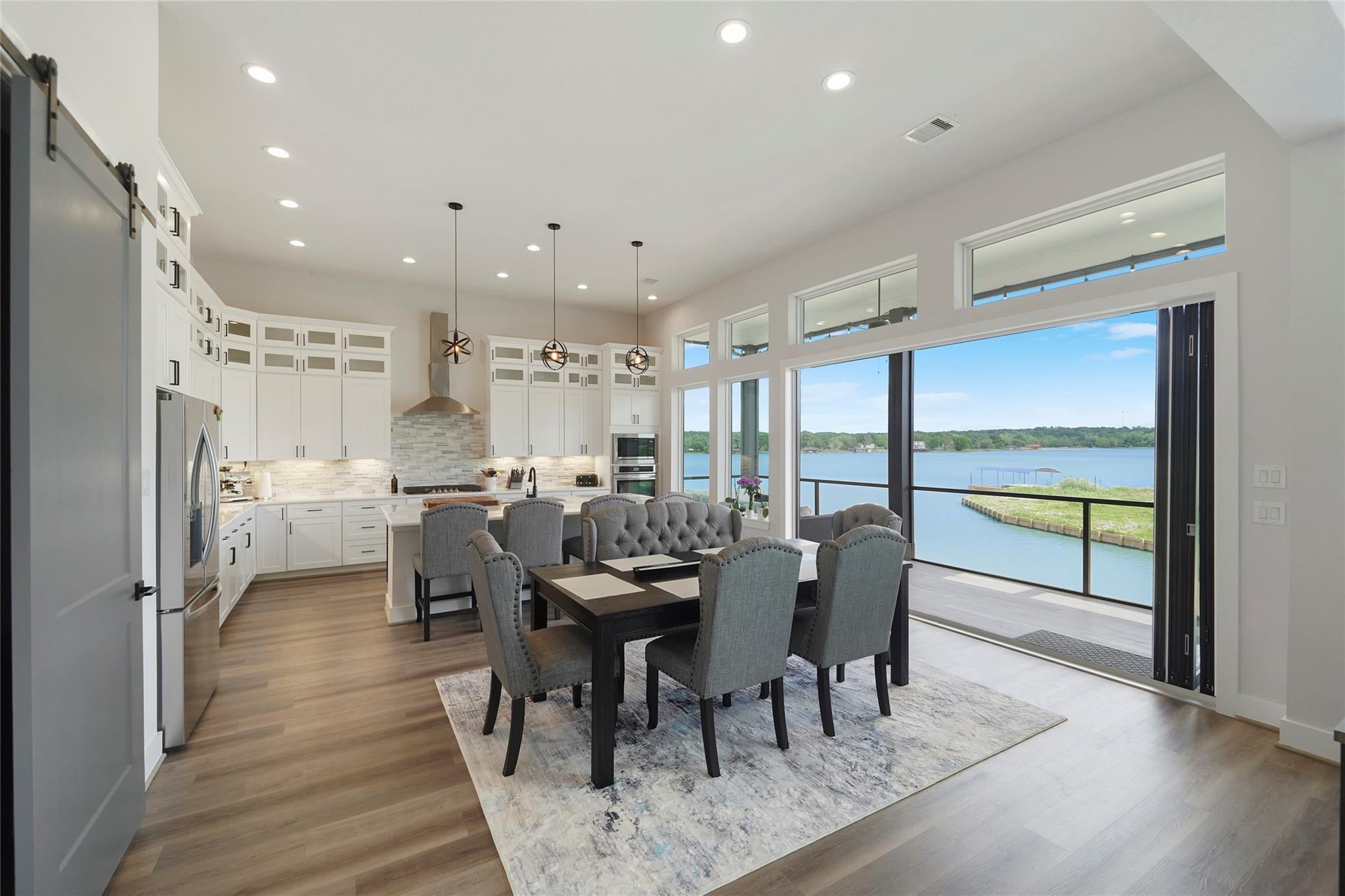
Lake Conroe. Not many cities this close to Houston have a large lake with waterfront and lake-view neighborhoods. It draws weekend boaters, retirees, and others who want recreation close to home.
Health care and education. Hospital systems have expanded into Montgomery County, and Lone Star College's Montgomery campus is right in Conroe. Those aren't flashy, but they tell you a community has reached the point where people can live, work, learn, and get care close by.
Who's Moving to Conroe?
One thing we hear from clients is that they expected one type of neighbor and found several. Here are the groups we see most often.
- Those upsizing from closer-in areas. They want more space, a yard, and a neighborhood with parks and amenities, often without giving up a reasonable commute.
- Houston-area commuters. Some drive south for work every day. Others work hybrid schedules, which makes the I-45 trade-off much easier to live with.
- Retirees and lake lovers. Lake Conroe is a big draw for people who want recreation at their doorstep.
- Out-of-state relocators. People coming from higher-cost areas are often pleasantly surprised by what their budget buys here, though they're sometimes less prepared for Texas property taxes, which we cover below.
- Local move-ups. Plenty of longtime Montgomery County residents are simply trading up within the area as their needs change.
What's It Actually Like to Live in Conroe?
Conroe isn't one single experience, and that's what surprises many people who are relocating. Here's how we usually explain the main flavors.
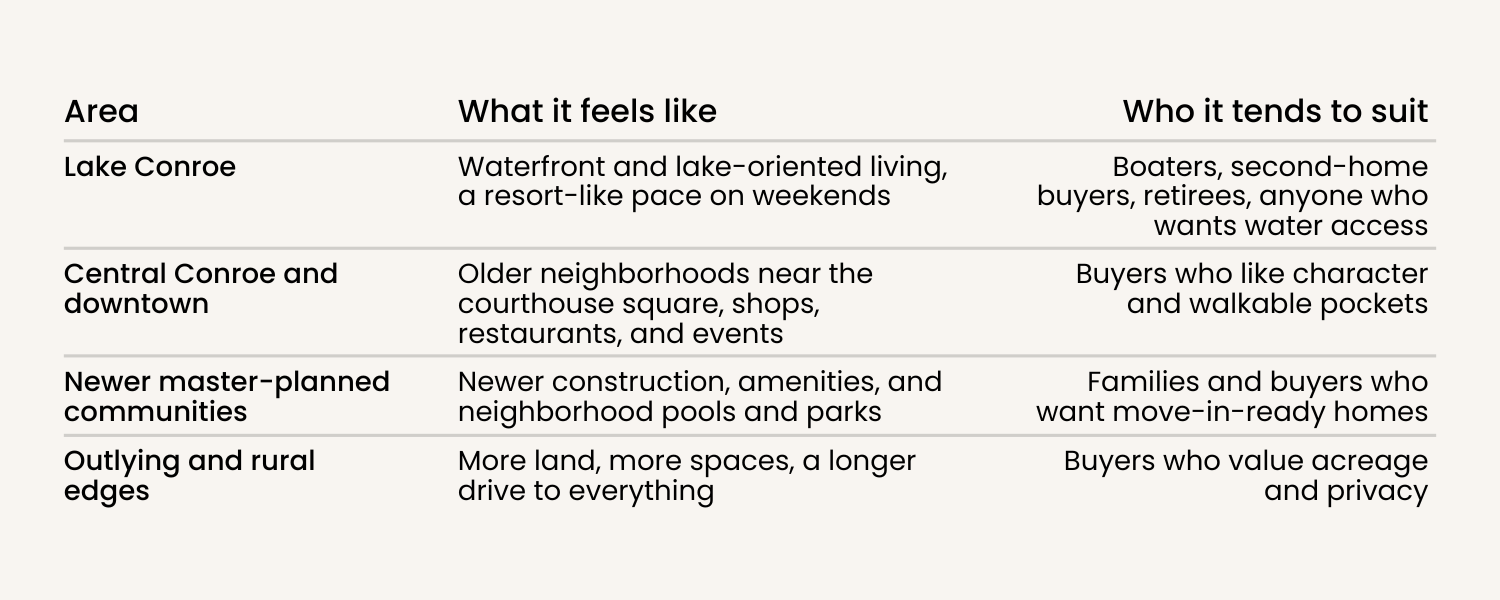
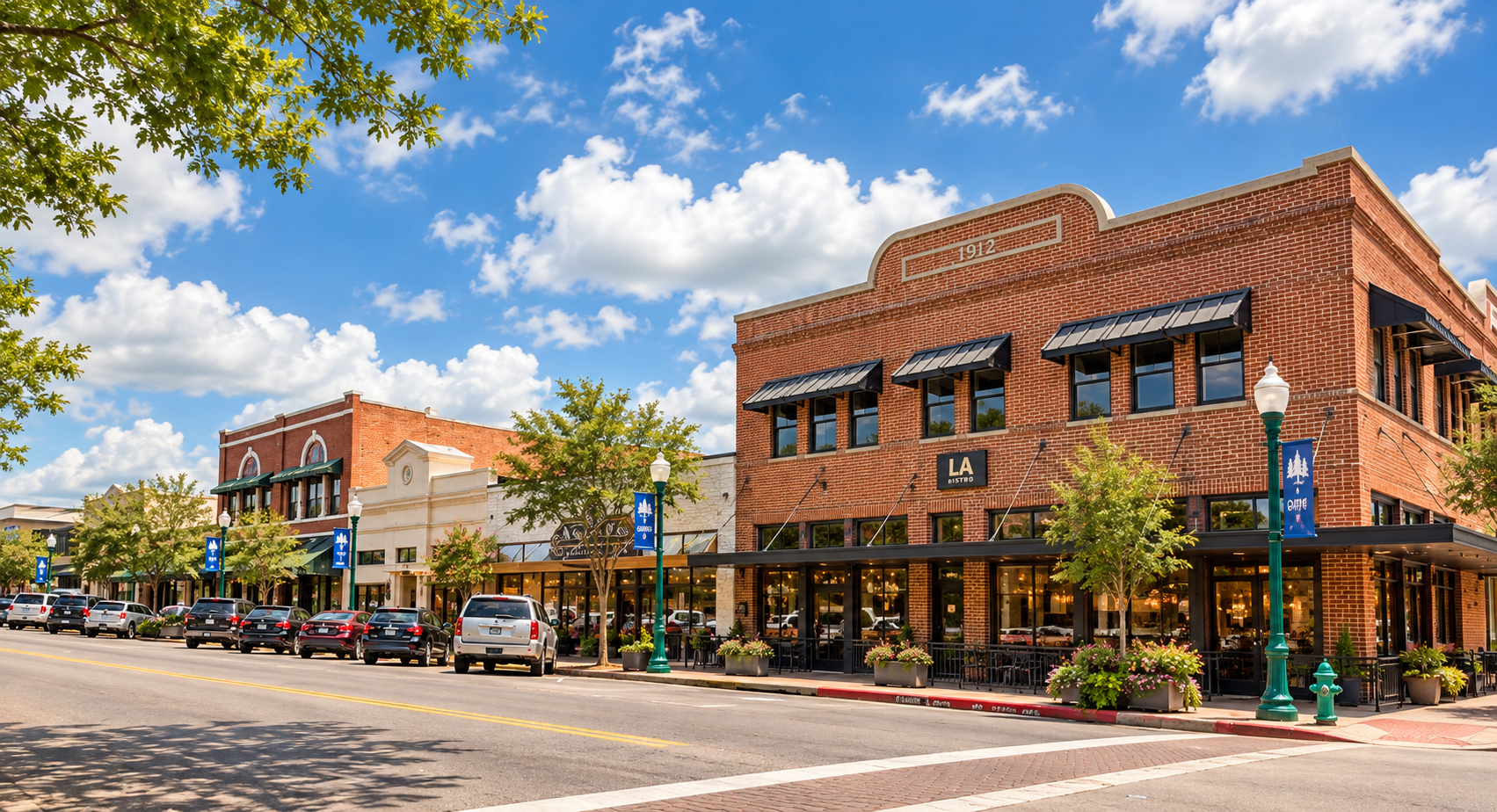
Downtown has also changed in recent years. Older buildings around the square have been renovated into restaurants, shops, and event venues, and it's become a place locals actually go, not just somewhere to pass through.
Things To Do Around Conroe
Part of what makes a city feel like home is what you do on a regular Saturday. A few of the things that keep Conroe residents local on the weekends:
- On the water. Boating, fishing, and lakeside dining at Lake Conroe are a big part of the lifestyle for many residents.
- Downtown. Walk the square, grab a meal, and catch whatever events are happening. It's one of the easier places in the area to spend an afternoon without a plan.
- Parks and the outdoors. Between the lake, local parks, and nearby wooded areas, there's plenty of room to get outside.
- Proximity to everything else. The Woodlands is close for shopping and dining, and Houston is within reach for concerts, sports, and the occasional big-city day.
The Honest Trade-Offs
Growth is good news for a lot of people, but it comes with real trade-offs, and we'd rather you hear them from us than discover them after closing.
Traffic. I-45 is the big one. Traffic along I-45 can be challenging during peak commuting hours, and ongoing road projects can affect travel times. If you'll be commuting south during rush hour, drive the route at the actual times you'd travel before you fall in love with a house.
A changing landscape. Where there were open fields a few years ago, there are now rooftops and shopping centers. Some people love the convenience. Others miss the quiet. It helps to know which camp you're in.
Taxes and fees. Texas has no state income tax, but property taxes and, in many newer neighborhoods, MUD taxes or HOA fees charges part of the monthly picture. These vary a lot from one address to the next, so look at the full cost of a specific home rather than relying on a general rule of thumb.
Schools. School boundaries matter, and they don't always follow city limits. If schools are a priority, verify the zoned campus for any address you're considering rather than assuming.
How Does Conroe Compare to Nearby Areas?
People rarely shop Conroe in isolation. Here's how we usually frame it.
- Conroe vs. The Woodlands: The Woodlands is more established and tends to carry a higher price tag for comparable homes. Conroe often offers more variety in price and style, plus the lake.
- Conroe vs. Magnolia: Magnolia leans more small-town and rural. Conroe has more in-town amenities, health care, and shopping close by.
- Conroe vs. Spring: Spring is closer to Houston and fits buyers who want a shorter commute to the city's job centers. If you're weighing the two, our guide to living in Spring, TX walks through what to know.
None of these is "better." They're different trade-offs between price, commute, space, and lifestyle.
What Conroe's Growth Means if You're Buying
A growing city means more choices, especially in newer construction, but it also means competition in the best locations. Here's what we'd keep in mind.
- Decide your non-negotiables first. Commute, lot size, school zone, and monthly costs usually matter more than the number of bedrooms.
- Compare resale and new construction side by side. New builds can be appealing, but established neighborhoods often offer mature trees, larger lots, and a track record you can see.
- Look at the whole monthly cost, not just the price. Texas special district charges, HOA dues, and insurance all affect what a home really costs to own. Our guide on what buyers should expect to pay breaks this down.
- Be prepared when the right home becomes available. Desirable properties can still attract interest, but how quickly homes sell depends on the neighborhood, price, and current market conditions.
How to Tour Conroe the Smart Way
If you're relocating or just exploring, a little planning goes a long way.
- Visit at different times of day. A neighborhood at 10 a.m. on a Tuesday feels very different from 5:30 p.m. on a weekday.
- Drive your real commute. Do it during the hours you'd actually travel, not on a quiet Saturday.
- Look beyond the house. Check what's nearby: grocery stores, medical offices, parks, and what's being built next door or down the road.
- Ask about future development. Open land near a home you love may not stay open. Your agent can help you find out what's planned.
- See more than one area. Even if you think you want the lake, tour a newer community and an in-town neighborhood too. Comparing is the fastest way to figure out what you really want.
What Conroe's Growth Means If You're Selling
Conroe's population growth can create opportunities for sellers, but it doesn't guarantee strong demand for every property. Growth also brings new listings, which means buyers have more to compare.
- Price it for your specific neighborhood, not the city as a whole. A lakefront home and a home in a newer subdivision are in completely different markets, even if they share a ZIP code.
- Prepare the home well. When buyers have options, condition and presentation make the difference. If you're not sure where to start, see what to fix before listing.
- Know your costs going in. Our guide to what sellers should expect to pay covers closing costs so there are no surprises at the table.
- Think about timing and your next move. If you're selling to buy elsewhere in the area, coordinating both sides is worth planning early.
Where Conroe May Go From Here
No one can predict the future, but the same forces that built Conroe's growth are still in motion: highway access, spillover from the Houston area, and a community that keeps adding the things residents need close to home. As Conroe continues to develop, questions about road capacity, water resources, infrastructure, and preserving the city's character will remain important.
For buyers and sellers, the takeaway is simple. This is a market with a lot of movement, and the details of your specific neighborhood matter more than any citywide headline.
Frequently Asked Questions
Is Conroe, TX a good place to live?
For many people, yes. It offers a mix of price points, a lake, a revitalized downtown, and quick access to Houston and The Woodlands. The main trade-offs are traffic on I-45 and the pace of growth. Whether it's right for you depends on your commute, budget, and what kind of neighborhood you want.
Why is Conroe growing so fast?
A combination of highway access on I-45, relatively attainable housing compared to closer-in areas, spillover from Houston-area employers, and amenities like Lake Conroe, expanding health care services, and a growing downtown.
How far is Conroe from Houston?
Conroe is roughly 40 miles north of downtown Houston along I-45. Drive time depends heavily on the time of day, so test your actual commute before you buy.
What's the difference between living in Conroe and The Woodlands?
The Woodlands is a long-established master-planned community that generally comes with a higher price point. Conroe offers more variety, including lakefront living, in-town neighborhoods, newer subdivisions, and more rural pockets.
Are there different types of neighborhoods in Conroe?
Yes. You'll find lake communities, older in-town neighborhoods near downtown, newer master-planned communities, and more rural properties on the outskirts. Each has a different feel, price range, and set of trade-offs.
Should I buy new construction or a resale home in Conroe?
Both have advantages. New construction offers modern layouts and a fresh start, while resale homes often come with established neighborhoods and larger or more mature lots. The best choice depends on your budget, timeline, and priorities, which is why we recommend touring both.
Is it a good time to buy or sell in Conroe?
That depends on your situation and the current market, which shifts. The best way to get a real answer is to talk with an agent who's working in your specific neighborhood right now.
Thinking About Conroe? Let's Talk.
Whether you're moving to Montgomery County, selling a home you've outgrown, or just trying to figure out what your options are, the team at Southern Heritage Realty would be glad to help. We know these neighborhoods, and we'll give you straight answers about what fits.
Reach out to Southern Heritage Realty today to start the conversation. There's no pressure, just helpful local guidance.
Check out this article next